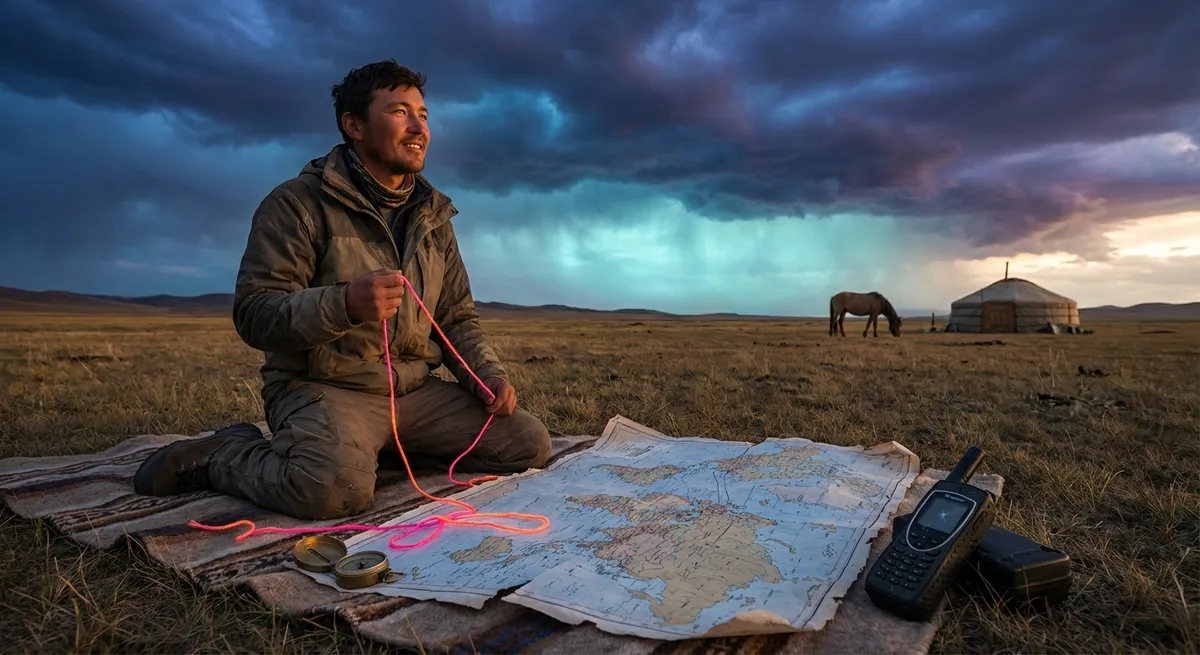
There’s a thin line between “worth the story” and “why would any rational human do that?” Extreme travel lives on that line. It’s not just about ticking off dangerous spots or collecting scars—it’s about chasing the weird edges of the planet where comfort drops out, and the world shows its teeth in the best possible way.
Below are five offbeat, high-intensity discoveries for travelers who get bored the second things start feeling normal.
Storm-Chasing Holidays: Sleeping Under Supercells
While most people run from storms, some travelers sprint straight toward them—on purpose, with cameras, radar, and a slightly concerning grin. Storm-chasing trips in places like Tornado Alley (central U.S.) turn violent skies into a moving, real-time classroom, where you’re learning meteorology at 120 km/h with a wall cloud forming in front of you.
You’re crammed into a van with a handful of other storm addicts, a lead chaser glued to radar apps, and a driver who somehow threads you between hail cores and rotation. This isn’t a safe zoo version of weather; it’s raw atmosphere rewriting itself over flat plains. Lightning forks horizontally across the sky, thunder rolls like a freight train, and sometimes a rope tornado drops out of the clouds so clean and precise it looks computer-generated.
Extreme? Yes. Reckless? Not necessarily—when done with experienced teams who respect the science and the danger. The real thrill isn’t just the adrenaline; it’s the realization that you’re watching the planet breathe, live, and occasionally lose its temper, from a front-row seat most humans will never see.
Volcanic Midnights: Lava Watching on the Edge of Reason
Imagine standing on a cooled lava field at night, the ground still warm beneath your boots, watching the horizon pulse orange like a beating heart. Volcanic travel is where extreme landscapes and very basic survival instincts go head-to-head. This is not your gentle “hike with a viewpoint” scenario; this is the inside of Earth, almost literally, glowing in front of you.
Around active volcanoes with designated safe vantage points, the experience can feel like you’ve glitched into a sci-fi film: steam plumes twisting into the sky, sulfur in your lungs, and the steady rumble of magma shifting beneath. On some volcano treks, you camp within sight of glowing craters, listening to distant eruptions like underwater thunder.
What makes this an intense discovery isn’t just the heat or the altitude, but the awareness that the ground itself is temporary. Lava travels, landscapes rewrite themselves, villages relocate. You’re not just visiting a place—you’re visiting a geologic event in progress, and you will never see that exact configuration of rock and fire again.
Desert Crossings Where the Horizon Refuses to Move
Most travelers flirt with deserts: a day trip into the dunes, a sunset camel ride, a photo, then back to the hotel pool. Extreme travelers stay. They push deeper until the concept of “landmark” stops existing and the sun becomes a blunt instrument beating down on your willpower.
Long-distance desert crossings—on foot, by bike, or with a minimal support convoy—turn sand and rock into an unforgiving teacher. Here, navigation is not optional; your GPS is only as reliable as its last battery bar, and every liter of water has a plan, a backup plan, and a contingency plan. Distances deceive you—what looks like an hour away might be half a day, because the horizon, in the desert, is a liar.
This kind of travel rewrites your sense of scale. Night skies explode with stars because there’s nothing else, literally nothing, competing for signal. Wind carves fresh patterns into dunes every day, erasing footprints like you were never there. You begin to understand that getting “lost” out here isn’t romantic—it’s simple physics and poor planning. Surviving it, though? That’s a story you’ll tell for the rest of your life.
Frozen Frontiers: When the World Turns to White Noise
There’s a special category of traveler who sees a -30°C weather report and thinks: “Perfect.” Polar and sub‑polar travel is extreme not just because it’s cold, but because cold changes every rule you think you know about being human. Batteries drain faster, metal bites your skin, and something as basic as removing your gloves at the wrong time can go from “annoying” to “medical problem” with shocking speed.
Crossing frozen landscapes on skis, snowshoes, or fat bikes demands a kind of disciplined obsession. You’re moving through a monochrome world where sound is dampened, light reflects hard, and distances are trick-trick-tricksy. The sun might skim the horizon and never really rise, or hang low and blinding across a white void that destroys depth perception. You learn to love layers, respect windchill, and treat weather forecasts as survival tools rather than casual info.
The reward is a flavor of silence you don’t get anywhere else. Ice fields stretching to the horizon, frozen lakes echoing with strange booms as they shift, the eerie dance of auroras when conditions line up. In a world addicted to noise and notifications, there is nothing more extreme—or more luxurious—than a landscape so empty your own breathing sounds too loud.
Vertical Obsession: Living Life on the Face of a Wall
Extreme rock and big-wall climbing isn’t just a sport; it’s a full-on lifestyle choice that says, “Gravity is a suggestion.” Vertical adventurers treat cliffs like long-term projects, inching their way up routes that might take days, sleeping suspended from the rock in portaledges that look like camping gear designed by a mad engineer.
What makes this an extreme travel discovery isn’t merely the physical difficulty—it’s the complete recalibration of normal. Cooking, sleeping, bathroom breaks, and mental breakdowns all happen while clipped into the wall, hundreds of meters off the ground. Your partner isn’t just a buddy; they’re your survival system. Every knot, anchor, and piece of gear is a negotiation with gravity, and gravity does not negotiate kindly.
From the ground, these walls look vertical and intimidating. From halfway up, they become entire landscapes: cracks that swallow hands and gear, ledges the size of dinner plates that feel like palaces, birds soaring at eye level instead of overhead. The world below shrinks into abstraction, and the casual problems of normal life feel microscopic. When you finally top out, sunburned, exhausted, and running on the last fumes of your courage, the view isn’t just outward—it’s inward, at the version of yourself who decided this was a good idea and somehow made it real.
Conclusion
Extreme travel is not about pain for its own sake, or about collecting dangerous trophies. It’s about stepping so far outside the curated, comfortable version of the world that you meet the planet—and yourself—without filters. Storms become teachers, deserts become ruthless zen masters, ice turns into an x‑ray of your limits, walls into vertical diaries of fear and progress.
You don’t have to start big. You start where your pulse quickens and your instincts say, “This might be too much.” That’s the doorway. Walk through it carefully, intelligently, and with the right respect for risk—and the world stops being a backdrop and starts becoming an accomplice.
Sources
- National Severe Storms Laboratory – Storm Chasing FAQ - Explains what storm chasing is, how it’s done, and key safety considerations
- U.S. Geological Survey – Volcano Hazards Program - Authoritative information on volcanic activity, risks, and monitoring
- U.S. National Park Service – Desert Hiking Safety - Practical guidance on surviving and planning travel in desert environments
- British Antarctic Survey – Living and Working in Antarctica - Details the realities and challenges of life in extreme cold regions
- American Alpine Club – Accidents in North American Climbing - Real-world case studies and analysis of climbing incidents, highlighting risk and best practices
Key Takeaway
The most important thing to remember from this article is that this information can change how you think about Extreme Travel.