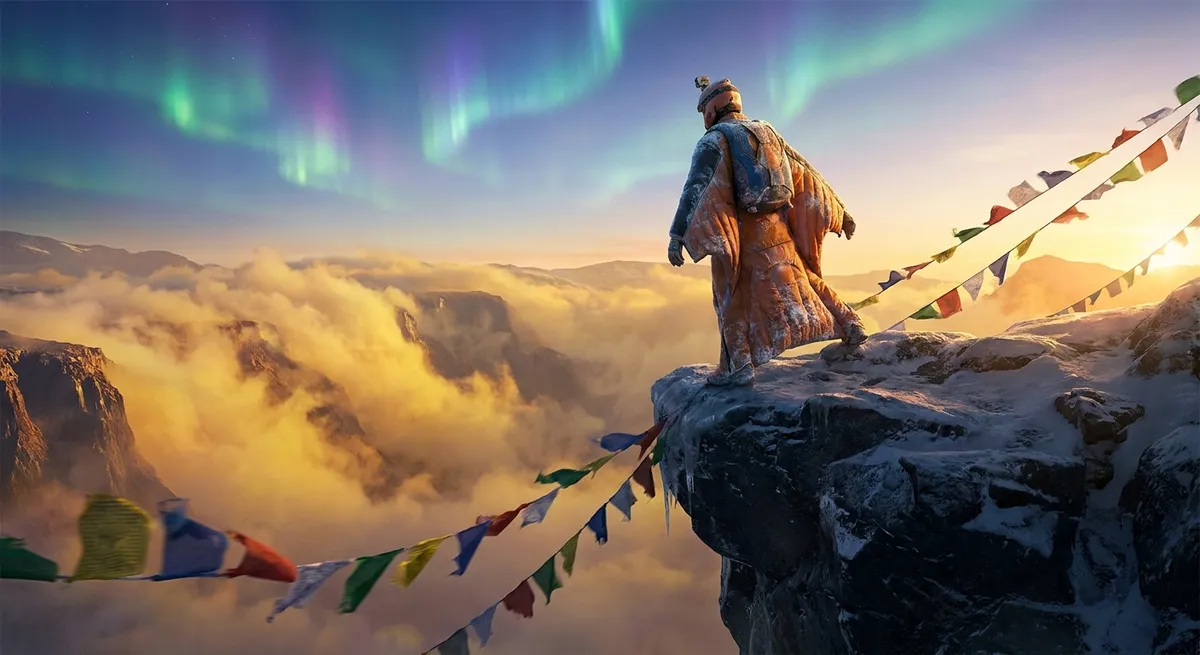
You don’t need another “hidden gem” list. You need places that make your pulse spike before you even hit “book.” This is extreme travel that doesn’t just push your comfort zone—it erases it, redraws it, and then laughs at the old version.
These five discoveries aren’t about bragging rights. They’re about that slippery moment where fear and awe feel exactly the same—and you keep going anyway.
1. Sleeping on a Glacier’s Edge in Patagonia’s Wind Tunnel
Picture this: you’re zipped into a tent that’s screaming under 80 km/h winds, your boots are crusted with ice, and somewhere below the ridge a glacier is groaning like the earth’s rusty hinge. Welcome to wild camping near the Southern Patagonian Ice Field in Chile and Argentina.
This isn’t your scenic-hike-then-cozy-lodge situation. Routes around the O’Higgins Glacier, Grey Glacier, or the approaches beyond the classic W Trek turn into a testing ground for gear, grit, and judgment. Wind can knock you sideways. Weather changes so fast it feels personal. You’re constantly choosing between exposure and progress.
The trick isn’t to “beat” Patagonia. You won’t. The win is learning to read the sky, time your moves, and accept that bailing out is sometimes the most hardcore choice available. You’ll wake to a sunrise that looks digitally enhanced, watch avalanches in the distance (from a safe remove), and drink glacier melt so cold it aches in your teeth.
For extreme travelers, Patagonia’s backcountry is the perfect paradox: a space where you feel tiny, outmatched—and exactly where you’re supposed to be.
2. Riding the Roof of the World: High-Altitude Crossings in Ladakh
Ladakh, in northern India, doesn’t just sit in the Himalaya—it feels suspended between earth and orbit. Thin air, razor-edged ridgelines, and roads that look like they were carved in a hurry by someone with a hangover.
The “easy” version is renting a motorcycle or 4x4 and traversing passes like Khardung La or Chang La, flirting with altitudes above 5,000 meters. The harder version? Trekking routes that weave between remote monasteries, high passes, and villages that function like self-contained planets.
Your lungs will protest. Your head might pound. Every step or throttle twist demands patience and acclimatization, not bravado. But then you crest a pass and the whole world falls away into bands of ochre rock, ice-blue rivers, and silence so loud it feels like a pressure wave.
This is extreme travel as slow endurance: monitoring oxygen, counting sips of water, listening to your body while your brain keeps whispering, “Higher. Just a little higher.” You leave with a recalibrated sense of what “remote” actually means—and how thin the line is between mystical and miserable when altitude gets involved.
3. Volcanic Nightwatch: Chasing Lava in the Dark
There’s a feral part of the human brain that wakes up when you watch molten rock move. Certain volcanoes around the world offer that front-row seat—if you’re willing to engage with risk, regulations, and raw, unstable geology.
Active destinations like Mount Etna in Italy, Kīlauea in Hawaiʻi, and select accessible volcanos in Central America can, at certain times, offer controlled proximity to lava flows, glowing craters, or fresh volcanic landscapes. You might hike across still-warm black rock at dusk, feel heat radiating through your boots, and watch the horizon flicker like the planet’s own warning light.
The catch: eruptions are not a show put on for travelers. Routes open and close based on seismic activity. Gas levels spike. Weather blows in. Any credible expedition or guide will treat detours, delays, and outright cancellations as non-negotiable.
On a good night, you stand in the dark, goggles fogged, listening to lava hiss as it cools. It smells like metal and brimstone and something older than language. Photos will never do it justice, but the smell will be burned into your memory forever.
4. Ice Labyrinths: Technical Caving Under a Melting World
Caves are already weird: no sunlight, distorted sound, time dissolving in the dark. Take that subterranean strangeness and run it under ice—glacier caves, lava tubes, and seasonal ice caverns—and you’ve got travel that feels less like a trip and more like trespassing in another planet’s infrastructure.
Think guided technical glacier caves in Iceland, seasonal ice formations in the Alps, or lava tubes in volcanic regions. You’re roped in, spikes on your feet, helmet beam slicing through shifting blue light. Ice above you groans or drips. The cave you’re in may literally not exist in the same form next year.
This is not a casual “gram it and go” situation. You’re dealing with an environment that is mobile, delicate, and impacted by climate change. Reputable guides bring safety gear, constant evaluation of roof stability, and a willingness to say “turn around” even when the Instagram moment is 20 meters ahead.
Why do it? Because extreme travel isn’t just about the edge of danger; it’s about the edge of time. These corridors are temporary. You’re walking through geography that’s mid-sentence.
5. Border of Nowhere: Multi-Day Desert Crossings on Foot
Forget the romantic “dunes at sunset” postcard. Spend days on foot in a desert and it stops being pretty and starts being profoundly alien. This is the kind of trip where the wind erases your footprints an hour after you make them—and you start to suspect it’s erasing your sense of scale too.
Long desert treks—guided, heavily planned, and logistically intense—can be found in places like the Sahara’s edges in North Africa, the Atacama in Chile, or select routes in Central Asia and Australia. The challenge isn’t a single brutal climb; it’s the accumulation of heat, exposure, monotony, and strict water discipline.
You learn to move early and late, to worship shade like it’s a deity, and to accept that sand will infiltrate every zipper and thought. The mirage isn’t the shimmering water on the horizon; it’s the version of you that thought “desert” meant just “hot.”
But come nightfall, when the temperature drops and the sky detonates into a starfield without light pollution, it clicks. You’re not crossing an empty place. You’re crossing a place where everything is turned down so low, only the essentials remain—on the landscape and in your own head.
Conclusion
Extreme travel isn’t about adding more danger to your life. It’s about subtracting the padding.
Glacier winds in Patagonia, Himalayan passes that steal your breath, lava that glows like a living wound, ice caves that are literally disappearing, deserts that strip away all the nonessential noise—these aren’t “vacations.” They’re collisions with the raw operating system of the planet.
Go with guides who respect the land more than your bucket list. Take gear seriously. Treat local regulations as survival manuals, not suggestions. And then, once everything is triple-checked and your exit plan is solid, step into the wrong side of comfort and see who you are out there.
Sources
- U.S. National Park Service – Volcanic Hazards – Overview of volcanic environments and the risks involved in visiting active volcanic areas
- Hawaiʻi Volcanoes National Park – Current Conditions – Real-time updates and safety information for travelers planning lava- and crater-viewing experiences
- UIAA – Mountaineering and Climbing Safety Standards – International standards and recommendations relevant to high-altitude trekking, glacier travel, and technical environments
- CDC – High-Altitude Travel & Altitude Illness – Medical guidance on acclimatization, altitude sickness, and safe planning for extreme-elevation trips
- NASA Earth Observatory – Ice, Glaciers, and Climate Change – Background on glacial dynamics and melting, relevant to understanding the changing environments of glacier and ice-cave travel
Key Takeaway
The most important thing to remember from this article is that this information can change how you think about Extreme Travel.